Blog

Book Review #3

Convince them in 90 Seconds or Less by Nicholas Boothman

When Nicholas Boothman walks into a room, the first thing you’ll probably notice is his shiny red shoes. Then you’ll take in his sharp, tailored suit. And finally, his warm, welcoming smile. Instantly, your impression of him is positive—and in this book, he teaches you exactly how to create that same effect in your own life.

We’ve all seen that person who can walk into a room and, within seconds, make everyone smile and feel at ease. Often, I could see through their motives, but I was always struck by how effortlessly they connected with others. That natural charisma always seemed like a mystery to me—until I read this book.

Boothman breaks down the art of making great first impressions and forming meaningful connections. He explains how your appearance, body language, tone of voice, and choice of words shape how others perceive you—often before you’ve even realized it yourself. Drawing on his career as a fashion photographer and his early experiences in marketing—particularly with a mentor named Muldoon—Boothman offers insight into how people connect and how we can become better at it.

My Key Takeaways:

1. Smile more.
This may seem obvious, but I’ve realized how often I forget to smile or appear closed off—even unintentionally. Boothman’s trick of saying “great” three times to boost your mood actually worked for me. It’s a simple shift that helps me bring more energy and warmth into my interactions.

2. Dress with intention.
I never paid much attention to how I dressed, but this book made me realize how much that oversight affects the way others see me—especially in professional settings. Now, I’m starting to see clothing as a tool for communication, not just function.

3. The 70-20-10 rule.
Boothman emphasizes that 70% of a first impression is visual, 20% is tone of voice, and only 10% is the actual words you say. That completely changed how I think about communication. I used to obsess over saying the “right” thing, but now I understand that how I say it—and how I present myself—matters far more.

Conclusion

Anyone who wants to grow their career, improve their personal relationships, or simply make a better impression will find something valuable in this book. Boothman presents his ideas clearly and practically, without sounding preachy or unrealistic. Convince Them in 90 Seconds has already helped me reshape the way I interact with others—and I think it could do the same for you.

Post #3, Learn by Purpose

Every time I asked in class, “Why are we learning this?” the teacher and students would mock me—as if it were a ridiculous question. I could never get a straight answer. Sometimes the teacher would even say, “You’ll never use this.”

Wait—what? I’m spending hours of my life learning, studying, and being tested on something that determines whether I get into college, and you’re telling me it’s useless? That’s not just discouraging—it’s demotivating. If students don’t see the value in what they’re learning, it’s no wonder they check out.


A New Top-Down Method

Right now, there’s a disconnection across every level of education. It’s as if the left hand doesn’t know what the right hand is doing. High schools aren’t aligned with colleges. Colleges aren’t aligned with careers. And the students are caught in the middle—confused, stressed, and unmotivated.

We need to flip the model. Education should start with purpose. Begin with the end goal—what career a student is working toward—and design a clear, coherent pathway that leads there.

For example:
If a student is aiming for a career in sales, marketing, or customer service, history and geography shouldn’t be taught in isolation. Instead, those subjects should focus on how cultural awareness, historical context, and regional behavior patterns affect how people make decisions. That kind of relevance makes the content matter.


Reworking Class Content

Pathway-specific class selection is a great start, but we also need to reshape how classes are taught.

In an engineering pathway, advanced math is essential. But the way it’s taught—memorizing formulas and applying them to made-up scenarios—disconnects students from the real world. Let’s change that.

  • Want to teach derivatives? Have students measure how the temperature of an electrical component changes as voltage increases—and grade them on the accuracy of their calculations.
  • Want to teach the Pythagorean theorem? Put away the packets and get out the wood. Have students build actual right-angle supports that require precision and problem solving.

Every concept taught should be tied to a scenario a student might face in the field—or be a foundational building block for something they will use. If it doesn’t do one of those two things, we need to ask why it’s being taught at all.


Conclusion: Purpose Creates Motivation

Students today aren’t just struggling with academics—they’re struggling to understand why any of it matters. But by designing a system that starts with their future and builds backward, we can create education that’s clear, relevant, and motivating.

The hardest topics—and the final career destination—should dictate what gets taught and how it gets taught. That way, by the time students graduate, they’ll already have hands-on experience doing the kind of work they want to do. In today’s system, that kind of experience might take years to acquire. In a purpose-driven system, it’s part of the journey from day one.

Book Review #2 – Atomic Habits by James Clear

If you’re someone who wants to level up their life, Atomic Habits is must-read. In just over 250 pages, author James Clear lays out a clear, actionable framework to help readers transform their habits and, ultimately, their lives. It wasn’t until I finished this book that I truly understood how much I needed to change if I wanted to achieve my long-term goals.

Clear’s central premise is simple and powerful: small changes, compounded over time, create big results. He breaks the habit formation process into four key principles:

  1. Make it obvious
  2. Make it attractive
  3. Make it easy
  4. Make it satisfying

He also teaches how to reverse-engineer bad habits using the same framework—by making them invisible, unattractive, difficult, and unsatisfying. Throughout the book, Clear illustrates these ideas with stories from his own life and from others who have used these principles to build lasting change.

Breaking My Video Game Addiction

One of the most personal takeaways for me was using Clear’s methods to overcome my lifelong addiction to video games. As an only child, video games had always been a source of comfort and escape. Even after going to college, making friends, and joining a fraternity, the habit lingered—and it started affecting my academic performance through chronic procrastination.

Inspired by Atomic Habits, I flipped the script:

  • Make the cue invisible: I went cold turkey and stopped associating any room in my home with gaming.
  • Make it unattractive: I replaced my time with more meaningful activities like reading, writing, working, and going to the gym.
  • Make it difficult: I deleted every game from my computer, creating a significant barrier to re-entry.
  • Make it unsatisfying: I reframed video games as a personal obstacle to my goals. I began to truly believe that success and gaming, for me, were incompatible.

This approach has worked for me so far. I haven’t quit gaming because I hate it—I quit because I want to take control of my time, energy, and future.

Building Better Habits

To reinforce my new identity and keep momentum, I began doing two things every single day:

  • Writing for 30 minutes for this blog
  • Reading for 30 minutes

Clear advises setting a consistent time and time limit for habits. I’ve stuck to this rule strictly: 30 minutes only. No more, no less. Even if I’m on a cliffhanger or mid-thought, I stop. Why? Because that unfinished feeling creates a craving to return the next day. Consistency beats intensity.

Over the course of a year, those 30 minutes a day add up to over 180 hours of reading and writing. That kind of discipline compounds—and builds confidence.

A New Routine, A New Me

Since removing video games from my routine, I’ve been going to the gym more consistently and for longer periods. I’ve also started this blog, which was directly inspired by James Clear’s own journey—he began by writing about habits before Atomic Habits ever existed. In a way, I’m trying to follow in his footsteps.

This book didn’t just help me form better habits—it helped me rewire the way I think about change, identity, and consistency.

Final Thoughts

Atomic Habits has been a transformative read. It gave me the tools I needed to improve my life and the encouragement to believe I could follow through. If you’re stuck, struggling, or simply trying to be better, this book can help you find the structure and mindset to get there.

“You do not rise to the level of your goals. You fall to the level of your systems.” — James Clear

Start building better systems. Start with this book.

To buy Atomic Habits by James Clear, click here

To see more book reviews, click here

Post #2, Outlining the System

In the 1860s and 1870s, the spirit of Manifest Destiny pushed westward alongside railroad tracks and waves of immigration. The federal government supported this expansion by passing the Homestead Act in 1862, signed into law by President Abraham Lincoln. It offered land to American citizens for a fraction of the cost compared to states like Ohio or New York. This resulted in vast, rural communities forming across Western America.

Families settling these regions were often poor and lacked access to basic resources, especially education. Still, due to newly introduced education policies in the 1870s, they were required to provide schooling. The solution was the one-room schoolhouse, a simple structure staffed by one or two teachers.

Surprisingly, the core structure of that 19th-century system has barely changed in over 150 years. A teacher at the front, students in rows, lessons taught from a textbook, a board, and obedience driven instruction. This format still defines much of public education today. The only significant difference is that schools have grown larger and introduced subject-specific teachers.

Meanwhile, society has transformed in unimaginable ways: the lightbulb, the atomic bomb, the internet, and the smartphone have revolutionized how we live and work. And yet, our education system remains stuck in the 1870s.

Educators Are Doing More With Less

Incredible teachers have tried to innovate within this outdated system. Some write their own books, others use their own money to decorate classrooms or fund creative projects.

One teacher from my childhood spent over $500 publishing a book that our class wrote and illustrated. She gave free copies to students whose families couldn’t afford them, absorbing a $150 loss. Thankfully, she could afford it, but not every teacher can. This reflects a broader truth: students in wealthier communities tend to receive better, more engaging educational experiences than those in under-resourced areas.

This imbalance places an unfair burden on educators and contributes to the profession’s declining reputation and retention rates. We need systemic reform starting with a complete rethinking of high school education.

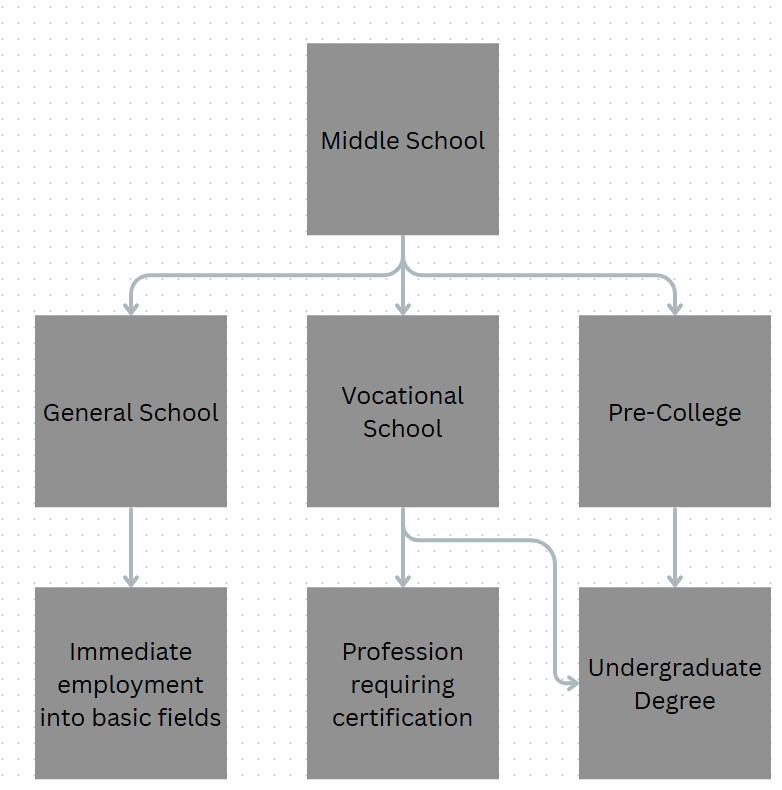
Introducing the 3-School System

My proposal is simple in concept, but powerful in impact: a 3-School System that organizes high school students into three distinct pathways:

  1. General Schools
  2. Vocational Schools
  3. Pre-College Schools

Each school type prepares students for different futures, while still offering flexibility and cross-learning opportunities. The goal is to ensure every student graduates with the skills and knowledge most relevant to their aspirations and abilities.

Rethinking Middle School: A Time for Exploration

Before students enter the 3-school system, they’ll pass through a reformed middle school experience.

Middle school is often a chaotic and difficult time. But from that chaos comes potential. Rather than focusing only on prep for high school, middle school should be a low-pressure, hands-on exploration of real-world careers. Students will learn what engineers, carpenters, accountants, nurses, or writers do and try it out for themselves.

During this phase, students will be evaluated on:

  • Aptitude
  • Interest
  • Performance on standardized tests, which they’ll be coached for in dedicated classes

Assessment will vary by track. For example:

  • Vocational placement may include hands-on skill assessments
  • Academic placement may focus more on traditional testing
  • Exceptional classroom performance in relevant subjects will also count

The goal is twofold:

  1. Give families a realistic, data-informed picture of each student’s strengths
  2. Determine scholarships and eligibility for vocational or pre-college schools

Middle school becomes a time of discovery and decision-making not pressure and burnout.

General Schools

Open to all students and free for everyone.

General schools prepare students for careers in:

  • Customer service
  • Labor
  • Childcare
  • Hospitality and service industries
  • Elementary teaching
  • Operational management

Students can begin working part-time at age 16 while continuing their education. Courses include: Civics literacy, American history, second-language learning, economics, personal finance, and basic managerial skills.

These schools do not offer advanced STEM or liberal arts courses. Instead, they emphasize life skills like budgeting, credit, taxes, and job readiness—topics too often missing from today’s classrooms. The aim is to empower students with practical tools to avoid paycheck-to-paycheck living and build stable futures.

Vocational Schools

Available by aptitude testing or “pay-in” option (capped at 5% of local median income).

Pathways include:

  • Electrician
  • Plumber
  • Welder
  • Pilot
  • Emergency medical services (EMT, CNA)
  • Barber
  • Vocational-level teaching

Structure:

  • Years 1–2: General education plus introductory technical instruction
  • Year 3: Focused training in a specific vocation
  • Year 4: Part-time work in the chosen field + part-time schooling

These schools reflect the real-world path for many trades, where certification is required after high school. The system allows students to graduate ready to work, often without student debt, while still leaving the door open for future advancement.

Pre-College Schools

Reserved for academically high-achieving students through testing or pay-in (capped at 10% of median income).

Pathways include:

  • Engineering
  • Architecture
  • STEM fields
  • Strategic management
  • Liberal arts
  • Economics
  • Higher education teaching
  • Computer science

These schools are rigorous and fast-paced, akin to elite private schools, but accessible through merit and affordability. They offer:

  • Advanced placement courses
  • College entrance prep (SAT/ACT coaching)
  • Research and major exploration classes
  • Structured guidance on choosing careers and colleges

Pre-college schools help our most academically gifted students realize their full potential and transition seamlessly into higher education.

A System Built on Merit, Not Wealth

Too many high-potential students, especially those from underprivileged backgrounds, are being left behind. The current one-size-fits-all model doesn’t serve their needs, and it doesn’t prepare the workforce we’ll need in the 21st century.

The 3-School System creates a flexible, equitable, and merit-based education structure that prepares every student for success, whether that means entering the workforce, a trade, or a university.

This is how we build a better, smarter, more resilient America starting with our schools.

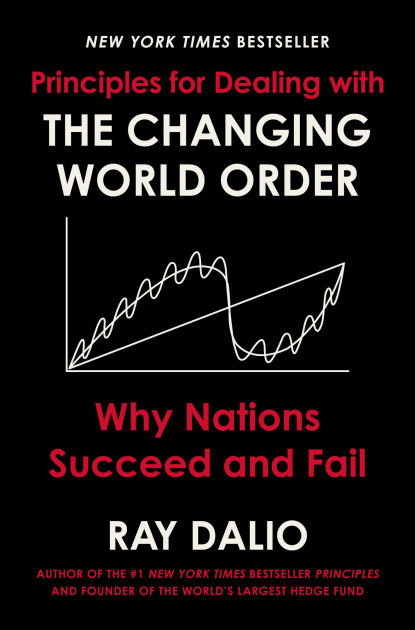
Book Review – Ray Dalio’s Principles for Dealing with the Changing World Order

Book Review #1 – The Changing World Order by Ray Dalio

Ray Dalio’s The Changing World Order offers a compelling look at how economic cycles, debt crises, and power shifts have shaped the rise and fall of great nations throughout history. His core argument is sobering: America, like empires before it, is showing signs of decline—and China, he argues, is poised to rise.

While I disagree with some of Dalio’s conclusions, particularly his optimism about China, I found the book incredibly valuable. It was the first book I read cover to cover in my journey toward becoming an avid reader, and it left me with a deeper appreciation for the global forces shaping our future.

At over 550 pages, the book is dense but engaging. Dalio uses historical data, graphs, and extensive research to draw parallels between past empires (like the Dutch, British, and American) and today’s shifting balance of power. His thesis is built on what he calls the “Big Cycle”—a pattern of rising productivity, increasing debt, internal conflict, and eventual decline. It’s a model that, according to Dalio, the United States is dangerously close to completing.

Where Dalio loses me is in his bullish outlook on China.

He argues that China is rising efficiently due to strong leadership, long-term planning, and disciplined economic policy. But when you look closer, the cracks start to show—especially in the form of state-owned enterprises (SOEs). These SOEs dominate China’s infrastructure, utilities, energy, and other essential sectors. They are often run by Communist Party officials and operate under government incentives rather than market principles.

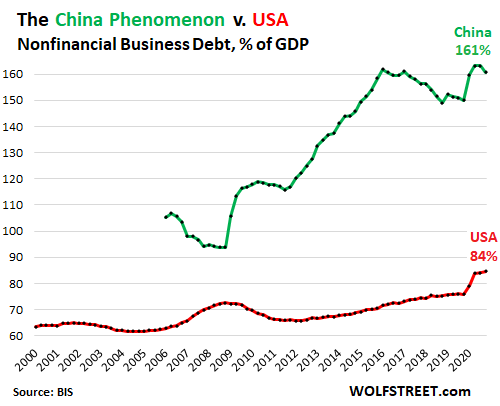
Here’s the problem: Many of these enterprises are highly indebted. According to the Institute of International Finance, China’s corporate debt (much of it tied to SOEs) reached over 160% of GDP in 2023, compared to about 81% in the U.S. What makes this dangerous is how these enterprises conceal losses. If one division (say, natural gas) underperforms, it might be subsidized by another (like electricity), masking the financial risk. Overinvestment in unprofitable infrastructure projects leads to maintenance cuts and increasing reliance on central bank bailouts. Without reform—like separating these enterprises or enforcing market discipline—these debt problems could cascade through China’s economy.

In contrast, while the U.S. has its own fiscal challenges, its transparent markets, independent institutions, and flexible labor force offer resilience that China’s centralized model lacks.

Yet where Dalio really succeeds is in highlighting the importance of education—though he doesn’t spend enough time exploring it. Education, as he alludes to, is foundational to a nation’s long-term strength. It fuels innovation, improves civic awareness, and creates the conditions for upward mobility. A well-educated population makes for smarter policies and more informed citizens.

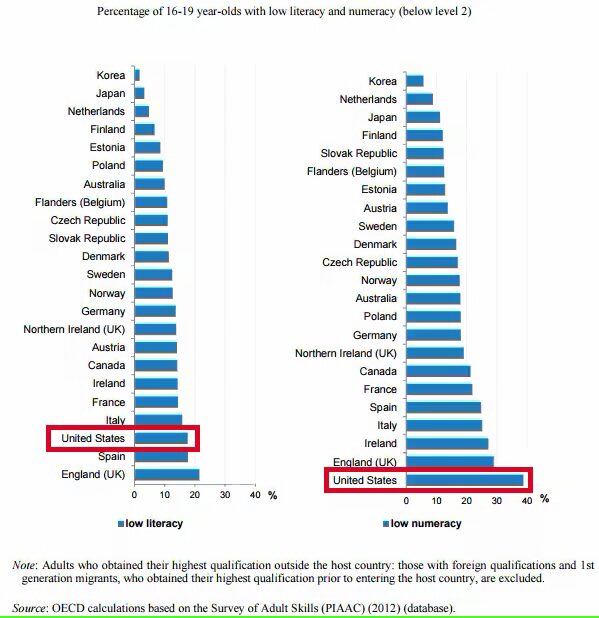
In the U.S., however, educational inequality threatens that very engine of growth. According to the National Center for Education Statistics, about 21% of American adults struggle with basic literacy skills. Furthermore, students in low-income districts often receive significantly less per-pupil funding than their peers in wealthy communities, leading to gaps in opportunity, achievement, and long-term earnings.

These gaps don’t just affect individuals—they impact national productivity. A less educated workforce means fewer qualified candidates for high-skill jobs, from engineers to doctors. As supply drops and demand rises, prices soar. For example, the average cost of a medical visit in the U.S. has more than doubled in the past 20 years, largely because of provider shortages and heightened pharmaceutical costs. That cost is borne disproportionately by low-income families, deepening inequality and fueling division.

Dalio’s warning is clear: without strong institutions and a cohesive national strategy, even the most powerful nations decline. I’d argue that America’s greatest chance at reversing its trajectory doesn’t lie in competing with China dollar-for-dollar—it lies in fixing what’s broken at home, starting with education.

Final Thoughts:
Ray Dalio is a brilliant thinker and storyteller. The Changing World Order is not just a book about finance or geopolitics—it’s a roadmap of the forces that shape our world. While I believe his optimism about China is overstated and his doubts about America too grim, the book serves as a powerful call to action. If we can rebuild our education system, we can rewrite our future—and maybe avoid the fate of fallen empires.

To purchase Ray Dalio’s book, go to principles.com and follow the buy now links.

To see more book reviews, click here

Post #1, Introduction to the Idea

Hello readers, educators, and policymakers,

Right now, across America, millions of children are wondering: What do I want to be when I grow up?

It’s a question I was asked constantly as a kid—and honestly, I never had a good answer.

When someone mentioned “engineer,” I pictured a 20-year-old grease monkey, covered in oil and fixing trains. The word “accountant” brought to mind a lifeless office worker—middle-aged, balding, and glazed over behind a computer screen. “Construction?” That conjured images of struggling blue-collar workers in unsafe, grueling jobs.

It wasn’t until college that my perspective began to shift. I met engineers, took accounting courses, and made friends in construction management. Only then did I realize how skewed and limited my early perceptions had been.

Growing up, I relied on movies and TV to shape my view of different careers. That was all I had. And I’ve come to learn that this isn’t just my experience—it’s a widespread problem. Especially for those who don’t attend college, there’s a major gap in understanding what careers actually entail.

Where we are now

Our current model was originally designed to produce factory workers. Though it has evolved, it still prioritizes college-bound students while neglecting those who might take different paths. It leans too heavily on parental involvement, and it doesn’t adequately prepare young people for real life after school.

Worse, I believe this system holds more people back than it helps. It’s not an issue of bad teachers, lazy students, or indifferent administrators—these are systemic problems. Everyone involved is doing their best within a flawed structure.

My goal is to propose meaningful reforms—ideas to make the system more efficient, more flexible, and more effective for everyone.

In upcoming posts, I’ll break down specific topics like:

  • Middle School Exploration
  • The 3-School System
  • General School
  • Vocational School
  • Pre-College
  • College Admissions

Each post will be tagged to help you navigate topics. You’ll also find a section under “About Me” with personal content: book reviews, news commentary, physical health tips, and my habit tracker where you can follow along with my daily routines and commitments.

If you’re interested in this mission—or have insights to share—please reach out via email. I’m not an educator, I haven’t written a book, and I certainly don’t have all the answers. But I believe with the help of a passionate community, we can make the biggest, boldest improvements to America’s education system in our lifetime.

Let’s get it right—together.

Thank you for reading,


Liam Patton

Blog Post Title

What goes into a blog post? Helpful, industry-specific content that: 1) gives readers a useful takeaway, and 2) shows you’re an industry expert.

Use your company’s blog posts to opine on current industry topics, humanize your company, and show how your products and services can help people.